
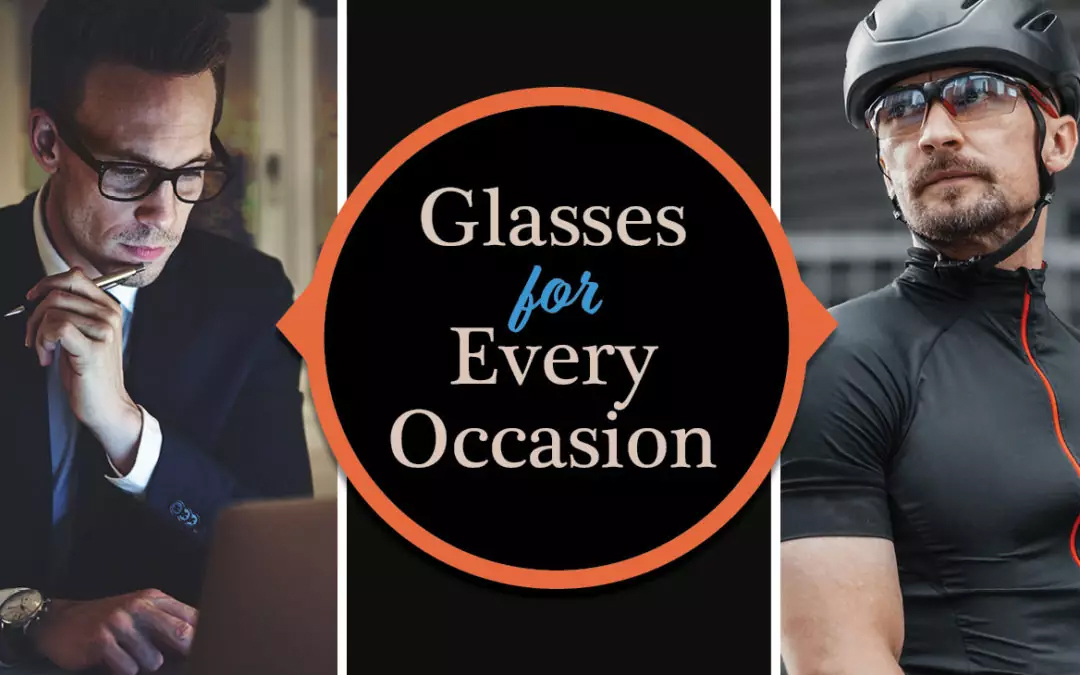
Your look might change depending on the day, so shouldn’t your eyewear change, as well? These days, it’s uncommon for one pair of eyeglasses to satisfy all of your needs. Specialty eyewear can help you optimize your vision for any occasion!
Below are a few occasions where specialty eyewear can improve your vision.
Computer Glasses
If you spend a lot of time looking at a computer, you are at an increased risk of developing eye strain. While you look at a screen, your eyes try to stay focused and aligned – that’s where computer glasses come into play. These glasses are for close-up distances, and they can reduce strain while staring at screens.
Golf Sunglasses
If you’re an avid golfer, you know that the proper eyewear is an essential item for your golf bag. Some sunglasses utilize colors in the lenses to enhance the green of the grass. Brown and amber lenses can help because it creates contrast against the golf ball. Rose-colored lenses can help during cloudy days and increase the contrast between light and dark colors, and green tints help in sunny conditions, reducing glare.
Boating or Fishing Eyewear
When on the water, the sunlight can reflect and create a glare that makes it hard to see. Polarized lenses can block the light reflected, reducing glare and discomfort. Glasses made for boating and fishing are also thinner and can fit snugly to your face so that the sun can’t enter on the side, top, or bottom of your face.
Driving or Cycling Eyewear
If you find that your lifestyle takes you on the road, driving glasses can provide a benefit. These glasses–either sunglasses or prescription lenses–can help get rid of the glare that makes it hard to focus on the road.
For extra protection, polarized sunglasses protect your eyes against sun glare on any occasion, and they can help increase the contrast, making objects easier and sharper to see.
Shop Work & Safety Glasses
Depending on your lifestyle, you may need glasses that provide extra protection. This eyewear–safety glasses, sports goggles, or shooting glasses–is durable and offers more coverage than typical designs. Some safety glasses add even more protection by having a frame with a wraparound design that has larger shields on the top or side of the glasses. These glasses, although sturdy, should still include a lightweight lens for comfort and superior eye protection.
Want to learn more about your specialty eyewear options? Give our office a call or ask our staff your questions at your next appointment. Our team is prepared to help you choose the right vision management options for your lifestyle.